

In 1942, the Navy Reserve Training Squadron based at Wold was split into two sections with NRAB (Naval Reserve Air Base) Training Squadron 1A remaining there and NRAB Training Squadron 1B stationed at the old “Hook-em Cow” Airfield at South St. Paul. Each base had its designated flight training area, with Squadron 1A training in the area south of the City of Minneapolis and 1B utilizing the area to the south of the City of St. Paul. Training flights in area 1A south of Minneapolis pursued a somewhat circular pattern from Wold-Chamberlain - either to the west, practicing landings at Field A6 (now Flying Cloud Airport), practicing maneuvers over the Lake Minnetonka area, then routing back along the Minnesota River to Wold-Chamberlain. Or, practice would take student pilots straight south from Wold to shoot landings at field A3 (known at the time as Paris Field), west past Cleary Lake to a maneuver area over Prior Lake, then back to Wold-Chamberlain.
Paris Field had been farmland and was on property owned by Jack Kipp, located, four miles west of Rosemount, Minnesota in Lebanon Township. In 1944, the ‘property owner, per the website of US abandoned airfields (airfields.freeman.com) was granted a license to operate the field as a public airport. (who that property owner was is uncertain as Kipp was at that time serving in the US Marine Corps in the Pacific). On February 16, 1946, following the war, the Minnesota Aeronautics Commission licensed Lt. Col. Jack Kipp, to operate as Southport Aero Service. He had become a decorated Marine Corps pilot, who was flying his reserve hours from Wold-Chamberlain Field. Kipp told Sherm Booen in a conversation many years later that he purchased war-surplus military aircraft from the government and kept them in the old farm barn, (still located on the field), along with geese that he raised! From this venue, Kipp sold 12 Stearmans at $150 apiece and a glider with trailer for $175. Kipp also taught students to fly on the GI Bill.
Records show that in 1947, the National AMA (Academy of Model Aeronautics) model airplane meet took place at Southport Airport. Hobby shop owner, Paul Ring, was the event coordinator.
Kipp had trained GIs to fly on the GI Bill, but in 1951 with the Bill’s funding dried up, Kipp decided to sell out and move to Florida. He had been an educator before his military time and in Florida he returned to his love of school administration soon becoming Principal of the Hollywood, Florida High School.
(The Jack Kipp story is very interesting in itself, but too lengthy to include here. He was inducted into the Minnesota Aviation Hall of Fame in April 1992 and died in March 1993).
Before he departed, Kipp sold the airport property to George Ellis of a restaurant-owning family, whose other venues including Smokey Point Bar-B-Que on the Beltline (now 494) and Cedar Avenue, and Ellis‘ Log Cabin Restaurant located adjacent to the old Robbinsdale Airport.
Ellis, in turn, sold the property to P.A. Rasmussen who owned the Viking Company which manufactured commercial audio equipment. Chuck Doyle was a stockholder in the Viking Company. Orville Brede leased facilities at the field to run a flight school and maintenance shop. Rasmussen shortly afterward hired Willard Steichen from Fargo, ND to takeover and run the operation. Larry Lucken worked as a maintenance technician for Brede and then Steichen. When Rasmussen died, his family maintained the lease with Steichen.
In 1955, the 2800’ runway 12/30 was paved. There was a crosswind grass strip of 2175‘ according to the 1959 Jeppesen Airway Manual. The crosswind strip was actually due North-South and very handy on windy days.
The Sports Car Club of America, Land-O-Lakes Chapter, staged annual sports car races at the field from 1963 through 1968 using the runway and taxiways. In 1969 the races at Southport were discontinued and moved to the newly completed Donnybrooke racetrack at Brainerd. I attended the Southport races and one year watched them while orbiting overhead in a Cessna 150 belonging to the Cloud 7 Flying Club out of Flying Cloud Airport. Forrest Lovley flew overhead the same year and when he wanted to land, chose a break in the races and landed, catching hell from the organizers. Scotty Beckett, the winner of the 1963 race, told me that the racing arrangements were handled between the Land-O-Lakes Club and Chuck Doyle.
Willard Steichen’s son, Jon and daughter Julie, both learned to fly at Southport Airport. The field became a popular base for local pilots who wished to fly outside the controlled airspace of Minneapolis-St. Paul International. Willard was airwise in many ways. Along with maps and student flight equipment in the office, he sold a booklet titled Everything I Know About Flying by Willard Steichen. I bought a copy and when I opened it I found only blank pages!
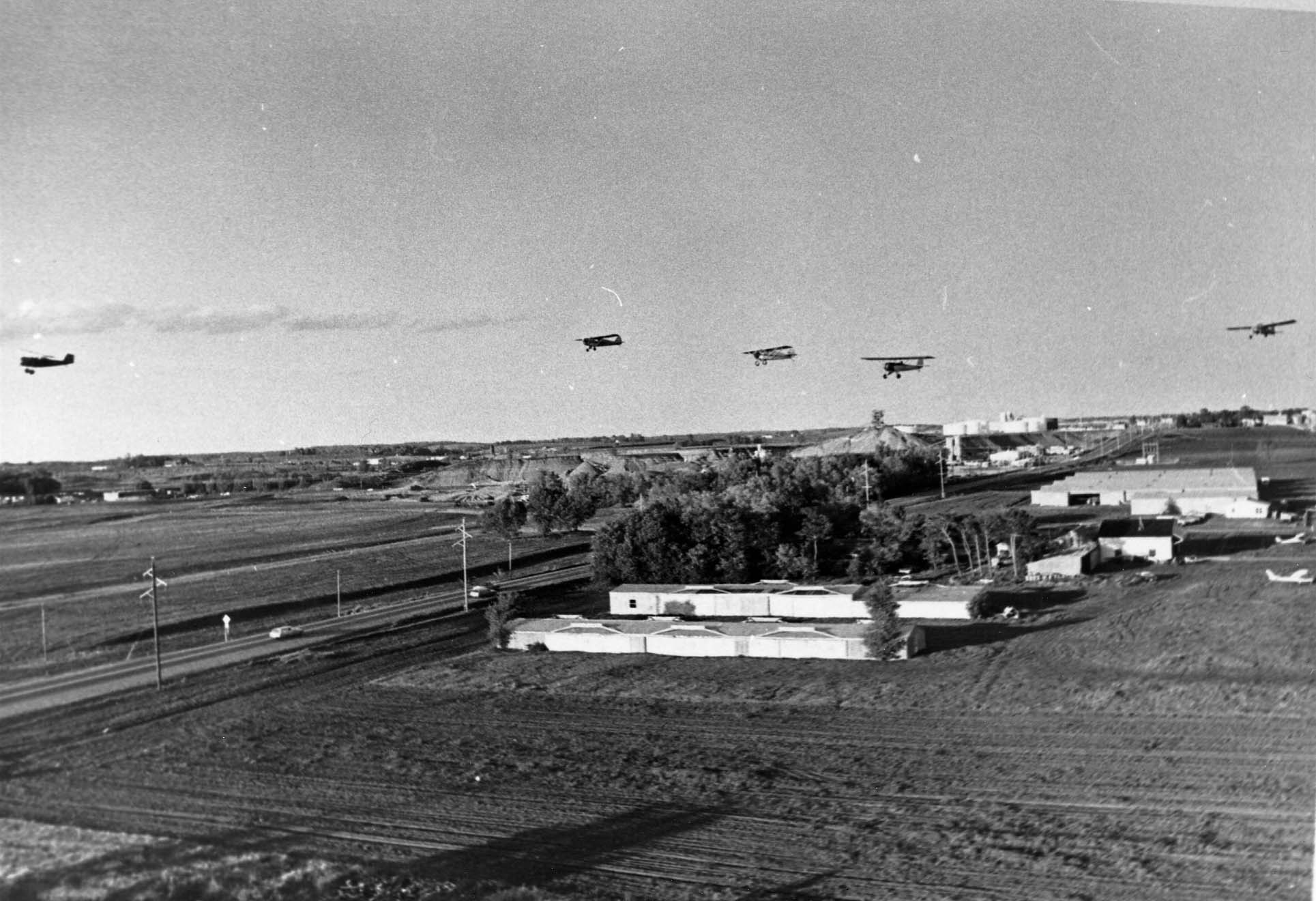
Southport Airport property became vastly valuable and the land was sold by the Rasmussen family to developers. The airport was officially closed on June 1st, 1974. The last commercial flight was flown by Viking Flying Service in May and the last flight by the sport pilots based there was about the same time with a series of fly-bys in salute to the nostalgic country airport. That flight included the following persons: Forrest Lovley in a Vega-powered Pietenpol, Harlan Darr in a Piper J-5, Gary Hanson in a Star Cavalier, D. Duea in a Corvair Pietenpol and Bert Sisler in his homebuilt Whistler.
With that salute, the field ceased operation, a chapter of Minnesota’s aviation history concluded. A place of great fun, where the essentials of flying were learned, banners were towed aloft, hangar doors frozen shut in the winter, and one could slow-fly backward in a summer breeze. It was a place where the vistas were always broad and the sky always beckoning.